
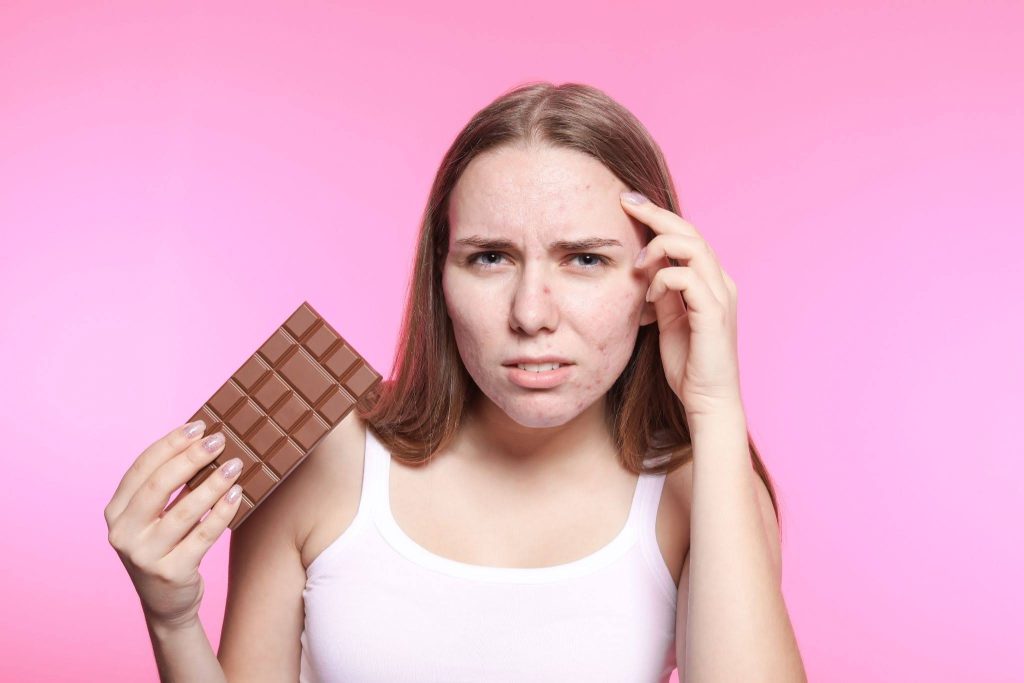
If you have spent any time on social media, you might have come across advice about changing your diet to improve your acne. There are countless posts talking about how this food or this way of cooking can help ‘fight acne’. While there is some evidence to suggest that certain foods such as dairy products or saturated fats may worsen acne, the link between specific anti-inflammatory foods and acne is less well understood. Current medical guidance suggests that having a nutritious and balanced diet is the best way to optimize control of acne. Read on as we go through some common concerns such as “does sugar cause acne breakouts?”.
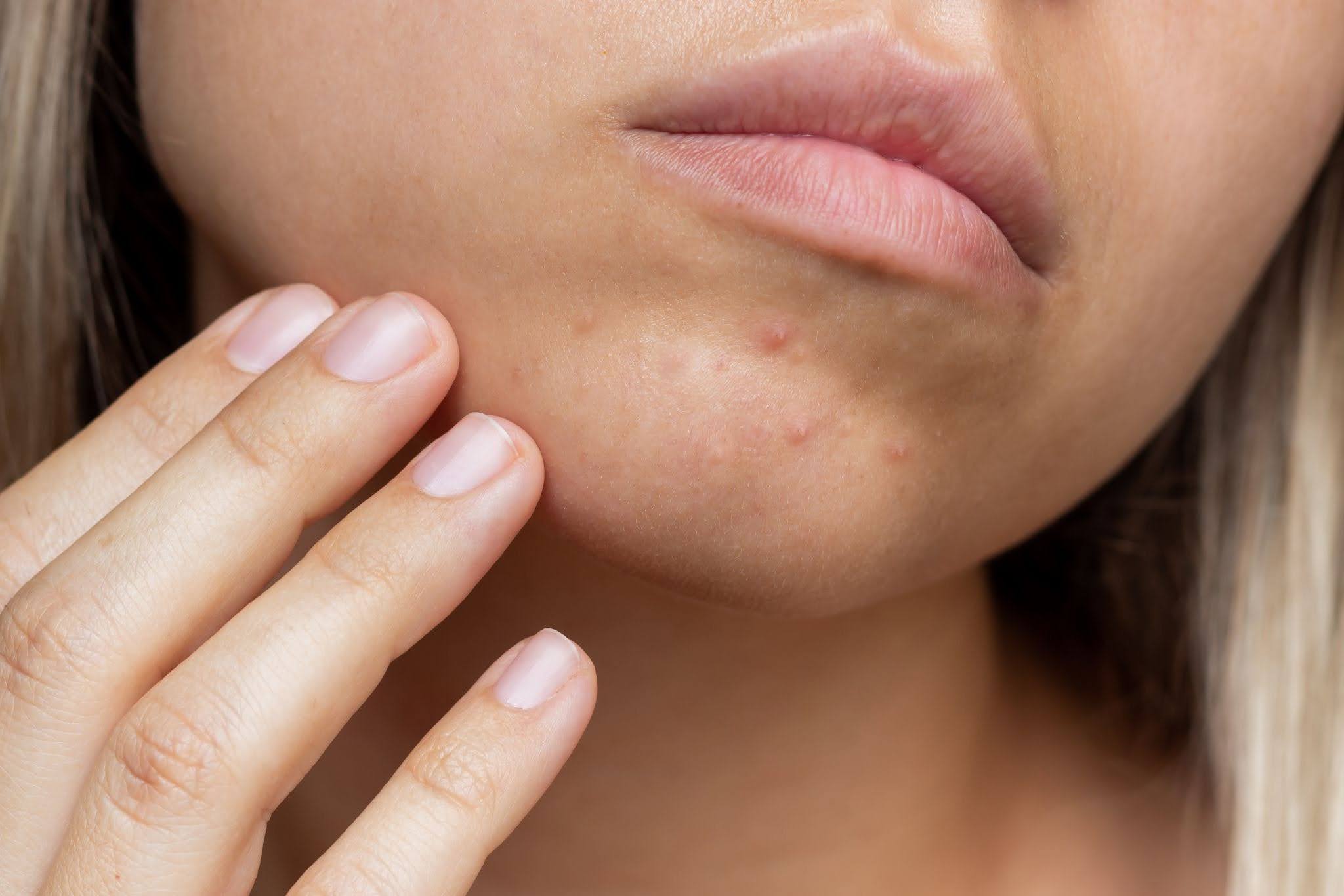
Yes, probably. Currently, our understanding of a direct link between diet and acne is not completely clear so it cannot be said that certain diets can cure acne. However, research does suggest that there is evidence suggesting diets high in sugar, dairy products, and saturated fats may contribute to acne flares.
The link between certain diets and acne flares is typically due to hormonal imbalances. For example, when your blood sugar spikes repeatedly, it may disrupt your hormonal balance, which can in turn lead to increased sebum (oil) production in the skin which adds to the blocked pores and thus irritates the acne.
According to diet and acne research, there are foods that can worsen acne. This is best explained in terms of food groups rather than specific foods. This is not to say you should completely avoid these food groups, however it may help reduce acne flares if you cut down on these foods. This might also vary from person to person so keeping a food and skin diary can help you track what foods flare your acne. For example:
| Foods that can cause acne breakouts | Diet and acne connection |
| Dairy products(e.g cow’s milk, ice cream) | While dairy products can be very good for your health, if you struggle with acne flares it may be helpful to reduce your intake of dairy products. |
| Carbohydrates high in glycaemic index(e.g white bread, biscuits, cakes, energy drinks) | Foods that spike your blood sugar have been linked to worsening acne. If you consume a lot of high-glycaemic carbohydrates, it is advised that you decrease your intake of this both for control of acne but also long-term health. |
| Saturated Fats (e.g processed foods) | If a diet contains too much saturated fats, it may contribute to inflammation around the body including the skin which can worsen acne. |
So does sugar actually cause acne? While the first medical problem that comes to mind when you think of a high-sugar diet is probably diabetes, there is increasing evidence of a link to acne. High-Glycemic foods or Sugary foods are digested very quickly which leads to a spike in sugar. To manage this sugar spike, insulin is released to control the blood sugar. However, too much insulin release can set off a chain reaction of hormonal stimulation which can encourage the oil glands to produce sebum (oil) in the skin. From there, all the oil in the skin mixes with dead skin cells to block pores. These blocked pores then create an ideal environment for bacteria to grow and spread which leads to the redness, swelling, and pain associated with acne breakouts.
Cutting down on foods like energy drinks, white bread, and biscuits may support acne treatment and also help with long-term blood sugar regulation.
Similarly, there is not enough evidence to say that there is a directly positive relationship between a dairy free diet and acne. Also, dairy products are still important to have in a diet due to their calcium content. Currently, research suggests that decreasing your dairy intake may be helpful to support acne treatment. Overconsumption of dairy products in someone who is at an increased risk of acne may contribute to hormonal imbalances that increase the oil produced in the skin. Bacteria thrive in the oily, clogged pores of the skin and cause inflammation and infection.
On the flip side, there is also not enough evidence that there are specific foods that help clear skin of acne. Rather than focussing on specific health foods, it is far more beneficial to consistently eat a balanced and nutritious diet. This can support your long-term health as well as your acne management. Follow this link to learn more about different types of acne treatments. So if you are changing your diet for acne, you might want to include:
| Nutrient | Example food source | How this might help with acne |
| Low-Glycemic Carbohydrates | Lentils, Oats, Grains | Incorporating more of these foods in your diet can help to maintain stable hormone levels and blood sugar control. This can help to decrease stimulation of the oil glands. |
| Antioxidants | Raspberries, Leafy vegetables | This can help to improve tissue repair and protect the skin cells. |
| Omega 3 | Walnuts, Salmon | These nutrients can help to decrease the inflammation in the body which contributes to the redness, swelling, and pain in acne. |
Yes, healthier swaps to your diet to make it more nutritious and balanced will likely improve your acne. However, this should not be used as a substitute for acne treatment especially if the acne is severe or widespread. This is because acne is more strongly linked to hormonal changes and genetics rather than diet.
Dietary changes should only be seen as supportive measures alongside acne management (e.g prescription vs OTC acne treatments). Cutting down on sugary foods and saturated fats while increasing your intake of grains, healthy fats, and vitamin-rich foods while
You may be happy to hear that there are no foods to avoid that cause acne directly. It would be unreasonable (and also not very fun) to encourage you to completely cut out some of the ‘problem’ foods discussed in this article. For example, dairy foods contain calcium which is crucial for bone health. Cutting this out completely would not only be detrimental to your overall health but also not significantly helpful for acne management. However, decreasing your intake of certain foods high in sugar or saturated fats will be helpful for your long-term health and also support any ongoing acne treatment.
Acne is a skin condition primarily caused by hormonal changes leading to excess oil production, bacteria in clogged pores, and skin inflammation. Genetics and diet can also play a significant part in acne. There is increasing evidence from research into nutrition and acne that foods triggering hormonal imbalances and inflammation can contribute to worsening acne. While there are no foods and drinks that cause acne directly, decreasing high-sugar foods and saturated fats will likely support acne management, especially if done alongside acne treatment.