
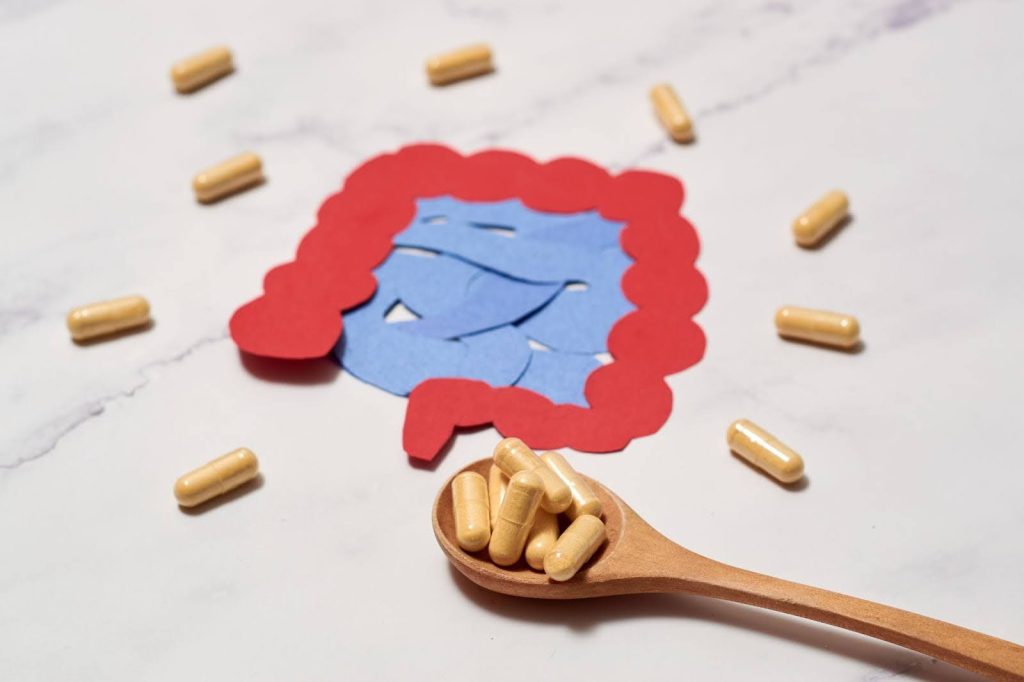
Antibiotics are an effective treatment for fighting off bacterial infections, but they can also disrupt the balance of “good” and “bad” microorganisms in your gut. This imbalance can lead to side effects such as diarrhoea, bloating, and digestive discomfort. Probiotics, often called “good bacteria,” are sometimes taken to help restore your gut “flora”. But can you take probiotics and antibiotics together and is it safe and effective to do so? In this Meds for Less article we explore what probiotics are and how you can effectively use them alongside antibiotics.
Antibiotics are medicines designed to kill or inhibit the growth of bacteria causing infections. Common examples are bacteria causing pneumonia, urinary tract infections, or strep throat infections. While antibiotics are effective at destroying the bacteria causing infections, they can also destroy the beneficial bacteria which live in your body’s gut- the gut flora.
Your gut flora is important in protecting you from harmful bacteria and improving digestion and absorption of nutrients, amongst other benefits. The disruption to your body’s gut flora can lead to side effects such as antibiotic-associated diarrhoea (AAD) and the overgrowth of harmful bacteria such as Clostridioides difficile.

Probiotics are live microorganisms, usually bacteria and yeasts, which are beneficial for your health. They are known as the positive or ‘helpful’ bacteria, and they have various health benefits for immune function and digestion.
Common sources of probiotics can be found in fermented foods and drinks such as yoghurt & kefir, kimchi, pickles, miso, kombucha, sourdough bread and some types of cheeses.
Probiotics help:
Antibiotics work by targeting bacterial cells, but since they can’t distinguish between “good” and “bad” bacteria, they can disrupt your natural gut flora.
A healthy gut flora is important for immune function, prevents growth of harmful bacteria and aids the digestion and absorption of nutrients. A disruption to the gut microbiome (such as by prolonged antibiotic use) reduces the healthy functions of the gut and can lead to side effects such as diarrhoea (AAD), bloating and nausea.
Other consequences include increased susceptibility to harmful bacteria and overgrowth of harmful bacteria such as C. difficile. It can take months to restore the balance of your gut flora following antibiotic use.
So, while antibiotics can disrupt your gut health, how do probiotics work? And, should you take a probiotic when taking an antibiotic?
Since antibiotics can destroy the healthy bacteria in your gut, studies have shown that taking probiotics may help restore the gut microbiome, benefit gut health and minimise the risk of side effects.
A study review comparing 4,000 participants showed that probiotics can reduce the risk of antibiotic-associated diarrhoea by about 50%. In the group taking probiotics, only 8% developed diarrhoea, compared to 19% in the control group.
Probiotics also appear to lessen the severity of other side effects, such as bloating, stomach pain and nausea. Taking probiotics following a course of antibiotic treatment helps:
However, there is still a lack of conclusive evidence that taking probiotics and antibiotics together benefits everyone. This is due to the diversity of gut microbiomes, individual differences and the variety of probiotic strains which all contribute to restoring a healthy gut flora. For example, the elderly population are more susceptible to recurrent infections and take longer to restore a healthy gut flora following antibiotic treatment.
We therefore recommend you to consult your doctor to discuss the benefits and uses of taking probiotics when on antibiotics.
Yes, you can take antibiotics and probiotics together. Most research points to the effectiveness of using probiotics both while using antibiotics and after. However, some studies suggest if you take antibiotics and probiotics together it might have little positive effects. This makes sense since antibiotics may destroy the probiotic bacteria as you are taking them.
Ultimately, using probiotics with antibiotics is generally safe and can even reduce the side effects of antibiotics, such as diarrhoea, bloating and stomach pain.
It is best to consult your doctor for advice on taking probiotics together with antibiotics. You may be recommended to eat more probiotic foods such as yogurt or kefir to help the regrowth of your gut flora.
If you would like to take probiotics while on antibiotic treatment, then it is recommended to begin taking it on the same day as your antibiotics, but be sure to leave a minimum of two hours after taking antibiotics. You should typically continue taking probiotics for at least several weeks following your antibiotic treatment.
The use of probiotics may vary depending on which antibiotic you are prescribed. Consult your doctor who will be able to tell you when and how to take probiotics during your antibiotic treatment.
The recovery of your gut flora may take from a few weeks to months. Continuing probiotics for around four weeks or more after finishing your course of antibiotics can help stabilise and support the healthy bacteria in your gut and reduce any lingering digestive side effects.
Since antibiotics can deplete the healthy bacteria in your gut microbiome, taking probiotics can provide several benefits during antibiotic treatment.
While probiotics are generally considered safe for the general population , there are some precautions to consider.
There are also reported side effects of probiotic use, summarised below.
| Side effects |
|
Always consult your healthcare provider before starting a probiotic with antibiotics, particularly if you have any concerns about side effects or risks.
There are a variety of probiotic options. Below we list the main probiotic strains mentioned in research studies, however, it is always best to refer to your doctor for advice.
In conclusion, evidence suggests that probiotics can be beneficial while on antibiotic treatments. Since antibiotics can destroy the ‘good’ bacteria in your gut, probiotics can help restore the gut microbiome, support your immune system and reduce the risk of antibiotic side effects, especially antibiotic-associated diarrhoea.
Although, more research is needed to establish whether probiotics will benefit everyone who takes them with antibiotics. It is generally considered safe and even beneficial when you use probiotics appropriately. There is also varying supporting evidence for different probiotic strains, and it may be that some probiotics work better for different antibiotics.
We recommend consulting your doctor, who can advise you on the types of probiotics, probiotic food sources, their potential benefits and side effects.
It is also worth considering taking probiotics long-term due to their various benefits including improved immune function, digestion and absorption of nutrients, among other benefits. While probiotics are a beneficial supplement, the best gut protection requires a balanced diet, adequate hydration, and time for your microbiome to naturally heal.